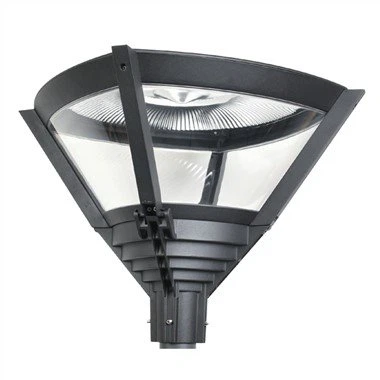
The Development Background Of LED Garden Lights
Nov 05, 2021
Policy background
1. On July 1, 2007, the street lamp design standard "Urban Road Lighting Design Standard" (CJJ45-2006) formulated by the Ministry of Construction was implemented.
2. In January 2008, the Ministry of Finance and the Development and Reform Commission jointly issued the "Interim Measures for the Management of Subsidy Funds for the Promotion of High-Efficiency Lighting Products", which will adopt indirect subsidies to focus on supporting high-efficiency lighting products to replace in-use incandescent lamps and other low-efficiency lighting equipment.
3. In April 2009, the Ministry of Science and Technology of the People's Republic of China launched the policy of "Ten Cities and Ten Thousands", which promoted the vigorous development of domestic LED street lamp technology and products.
4. On July 1, 2009, the local standard for LED street lights (DB44) drafted by a well-known enterprise in Guangdong Province was officially implemented.
business background
With the global economic growth, the global street lamp market will show a year-on-year growth trend. In 2010, the scale of the global street lamp market reached about 160 to 180 million.
Although the development speed of LED courtyard lights in 2009 was not as fast as expected, it is undoubtedly that it will replace traditional courtyard lights. Many LED companies are competing to invest in the research and development of LED garden lights. Hundreds have already launched LED garden lights, but most of them have not yet achieved mass production. Compared with the enthusiasm of LED courtyard lamp companies, China's LED courtyard lamp market has not yet made any effort in 2009. According to statistics, the scale of China’s LED courtyard lamp market in 2009 was only 200,000 to 300,000. In the next few years, driven by the policy of slogans such as 10,000 in ten cities and 100,000 in ten thousand miles, China’s LED street lamp market will continue to maintain a relatively fast pace. The market development speed is expected to increase from 560 million yuan in 2008 to 3.96 billion yuan in 2012, with a compound annual growth rate of 63.0%.